Inside Google Maps, the world already exists as a 3D model. Every building, every street, every tree, scanned and reconstructed as geometry. Fewer people notice that it contains, quietly embedded in its data, an inventory of the world's trees, distorted and refracted through the blindspots of the technological gaze.
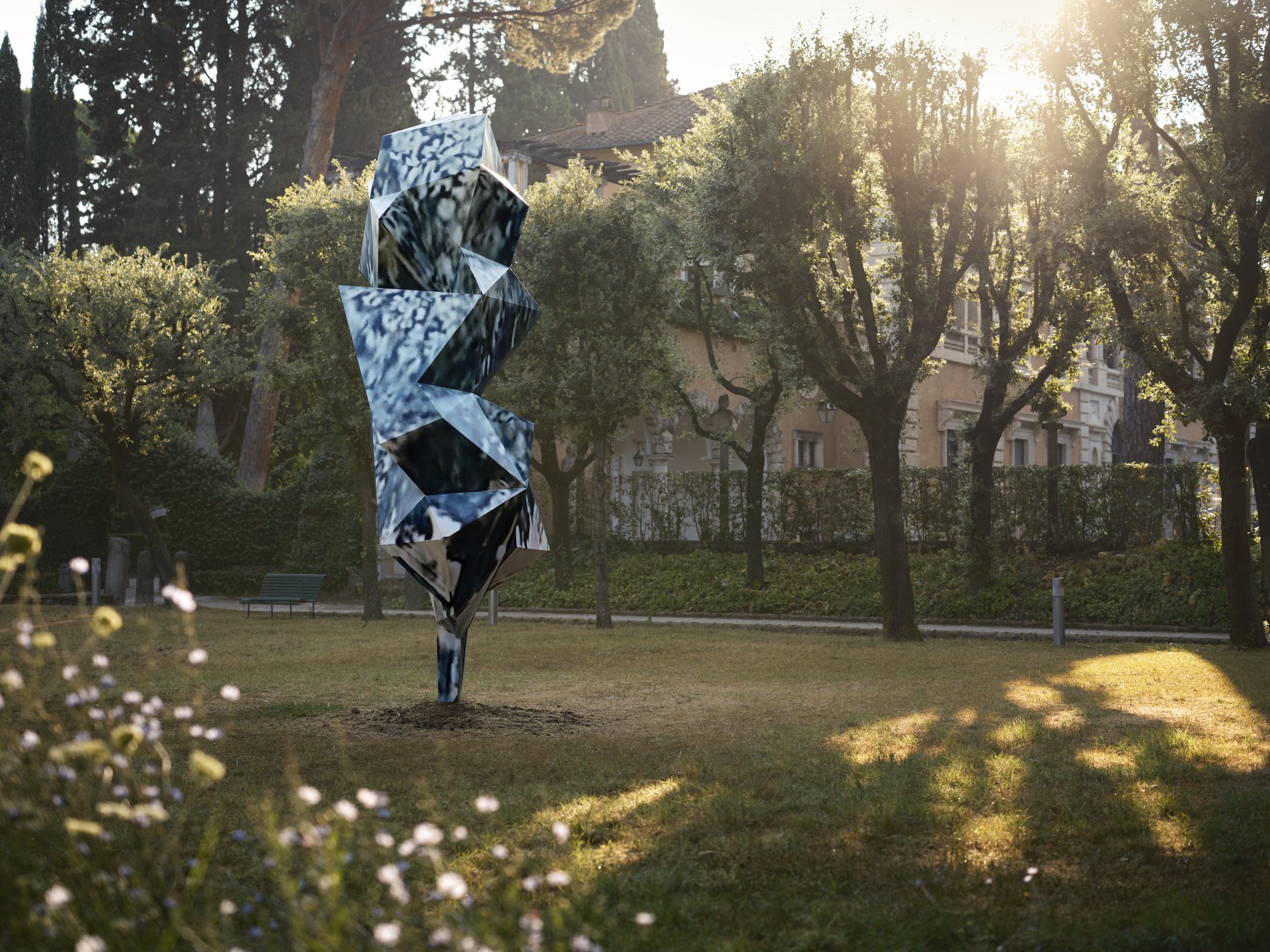
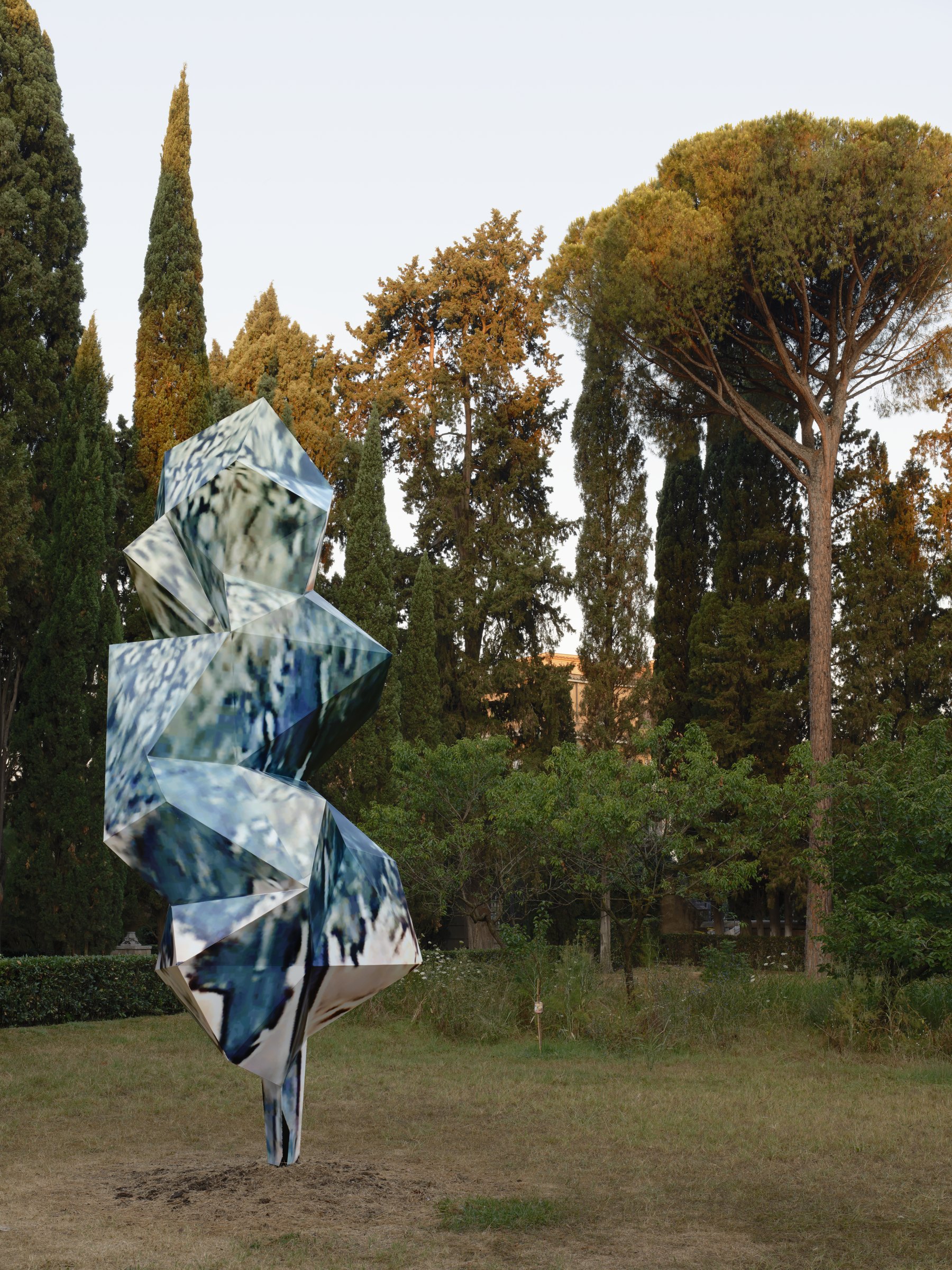
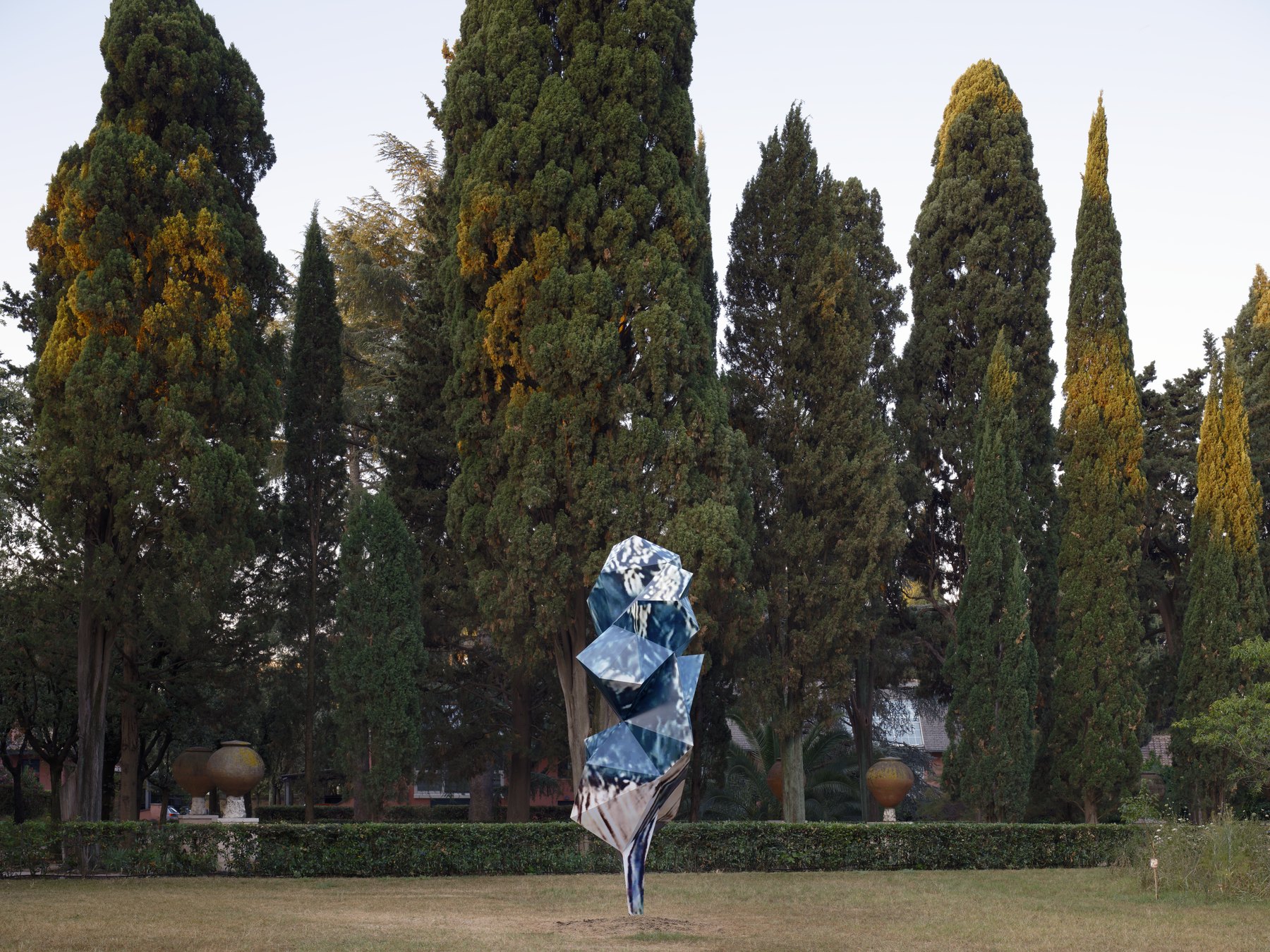
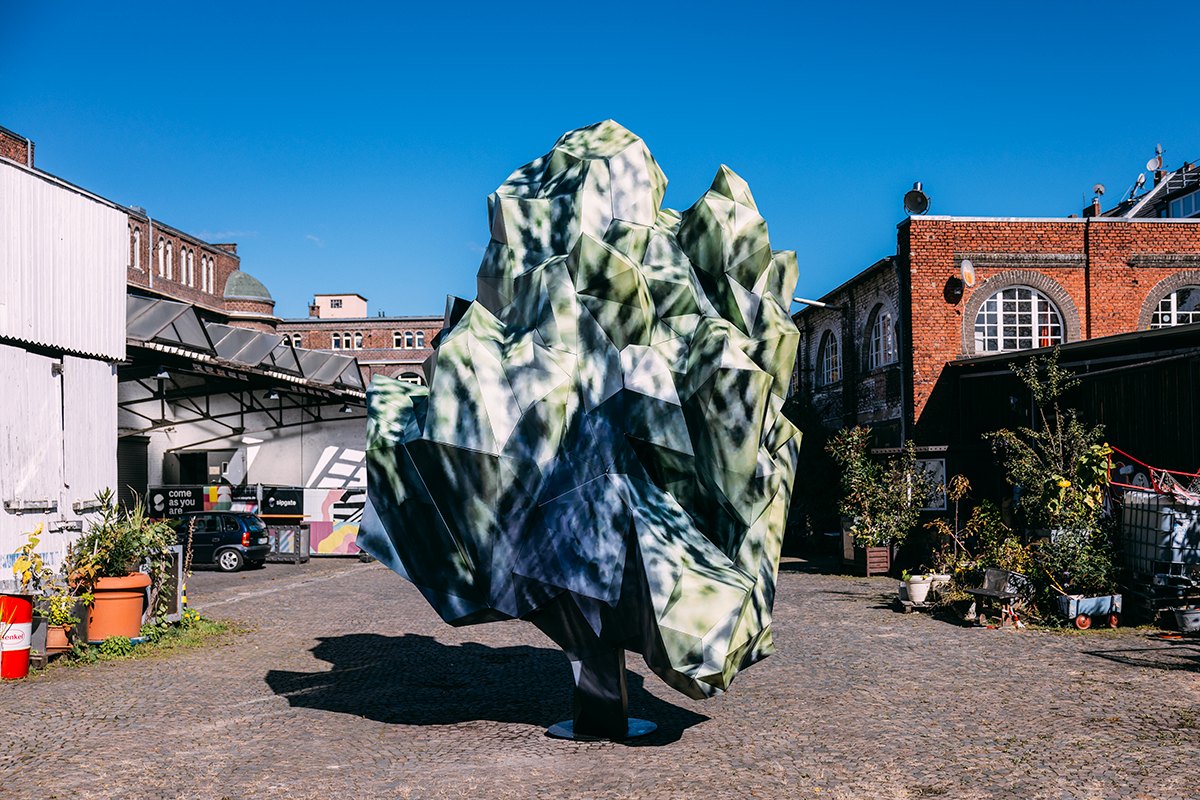
Google Trees begins there. A tree is extracted from Google's 3D map data, its geometry translated into fabrication files, and a life-sized steel sculpture is built from the result. The sculpture is installed into a similar landscape, not beside the original tree but somewhere nearby in spirit: the same region, the same light, the same ecological character. Close enough to rhyme.
The photographs of the finished sculptures have a problem. Almost no one believes them. The trees look too crisp, too symmetrical, too much like a render dropped into a real scene, and viewers assume they are composites. The physical reality of the work, its weight and weld marks and oxidising surface, is precisely what the image fails to convey.
That is the work's central argument. We live inside a representational system so conditioned by machine-generated imagery that a photograph of a real object can no longer be trusted to look real.
2026, Kunstfest, Villa Massimo, Rome
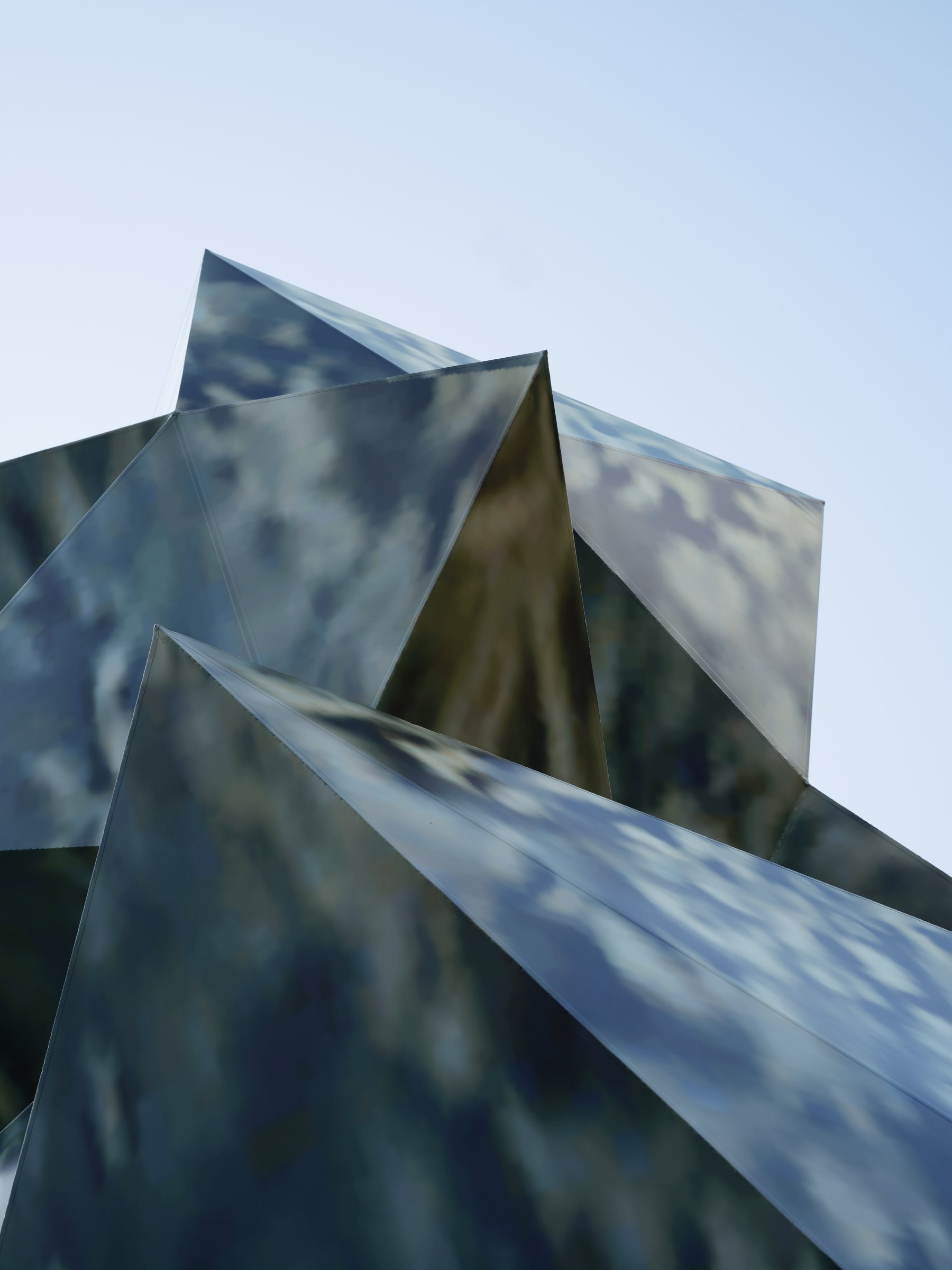
2025, Google Gradient Canopy, Mountain View, California
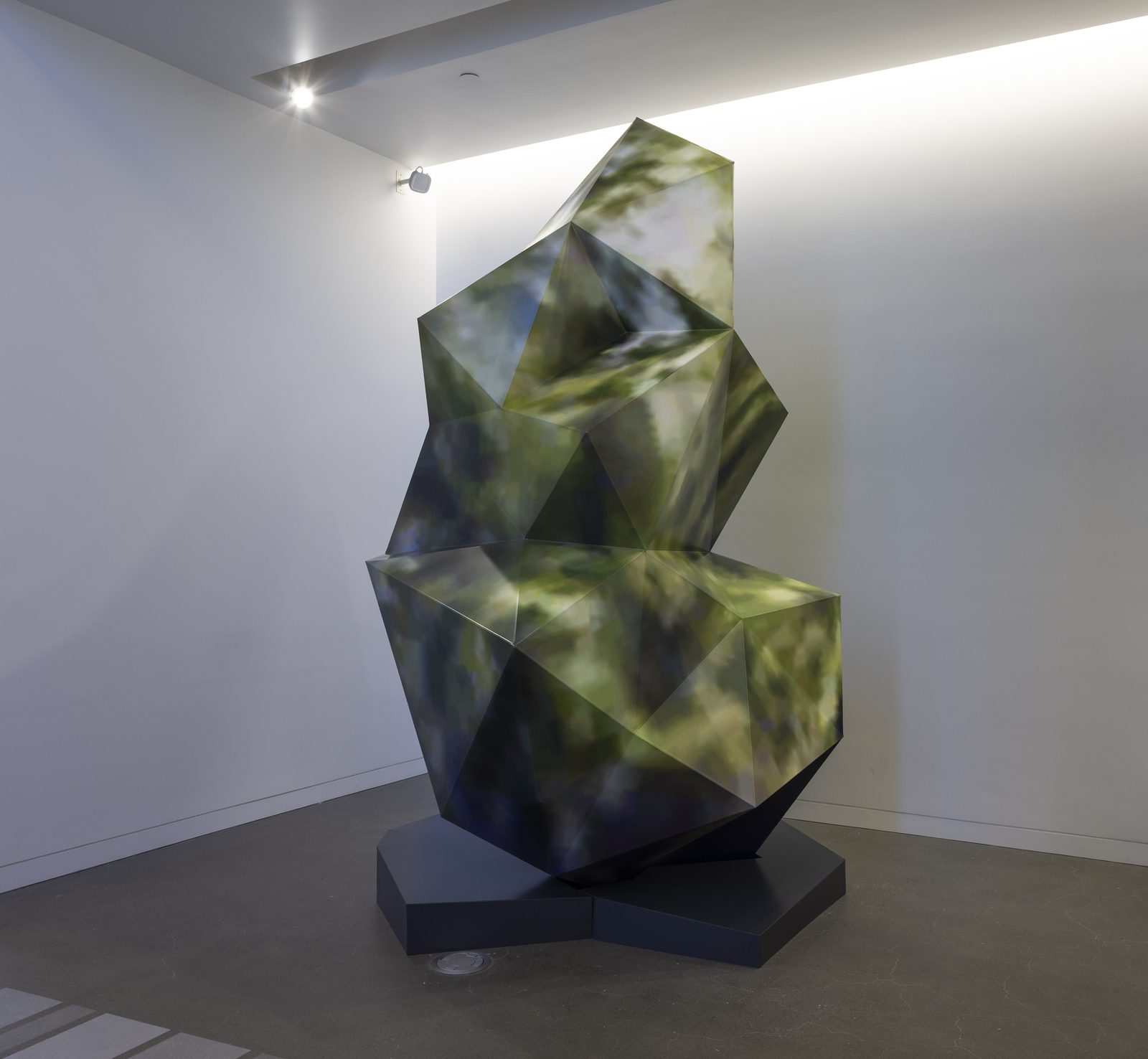
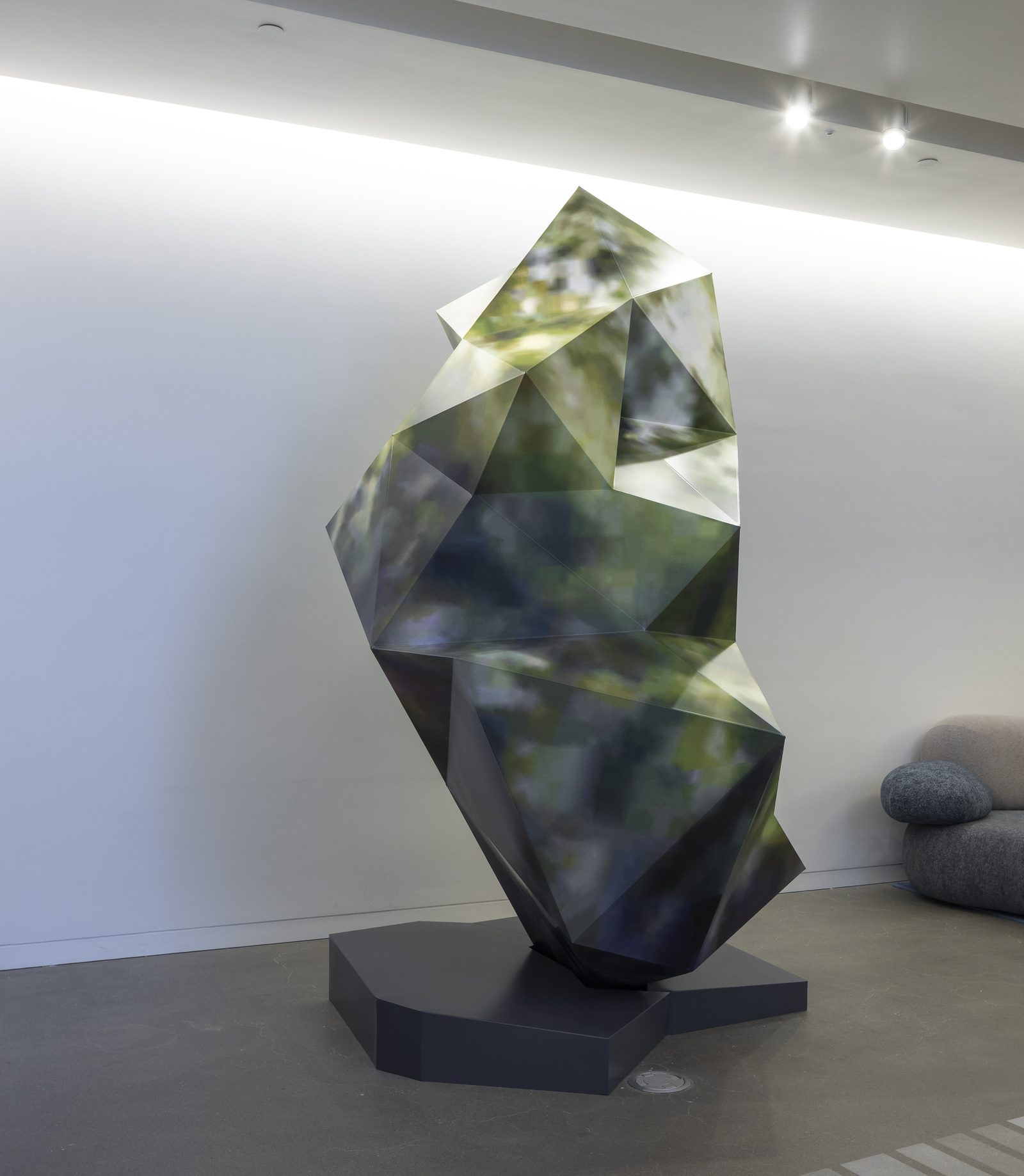
2025, Casa Bianca Art Site, Castelnuovo Calcea, Italy
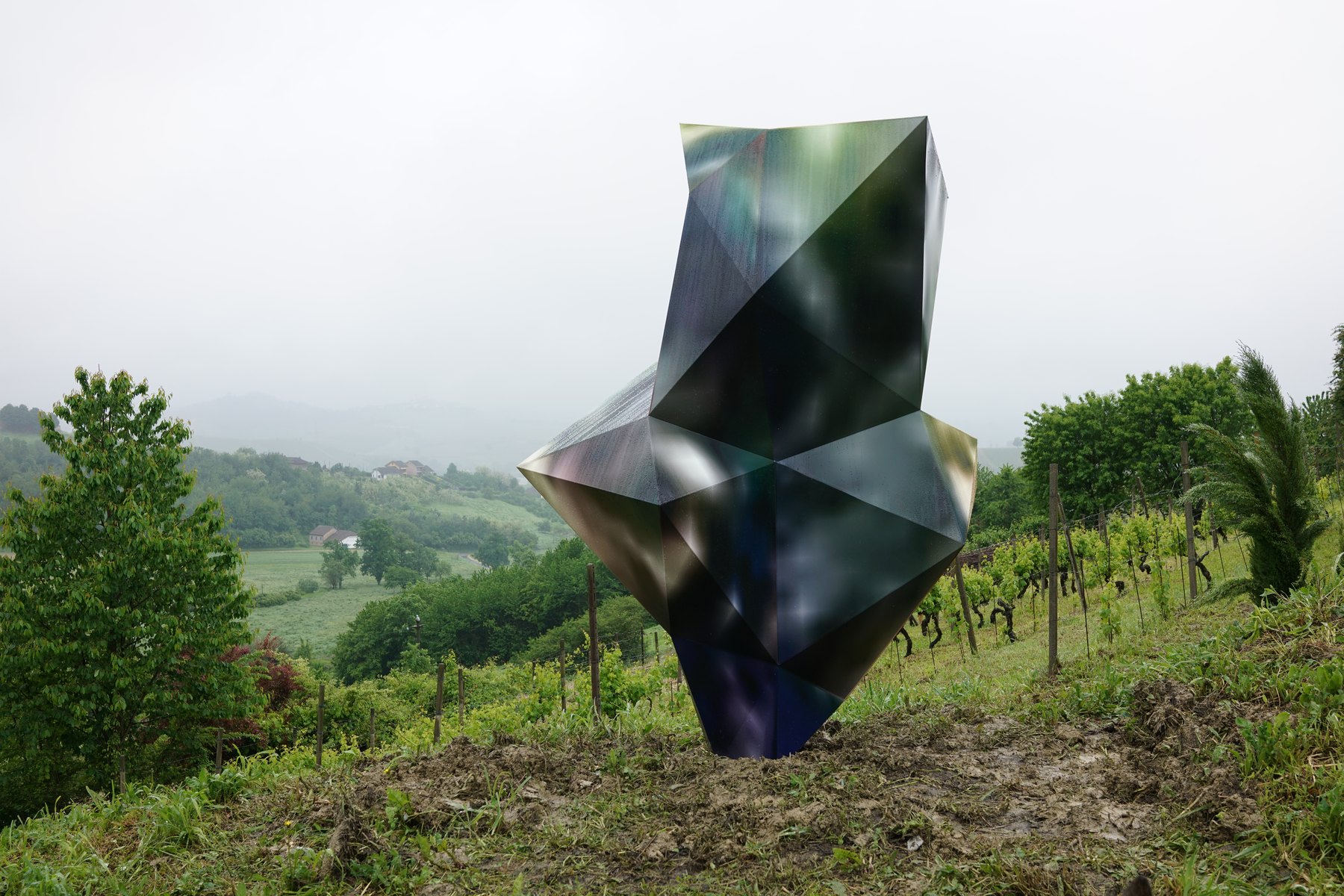
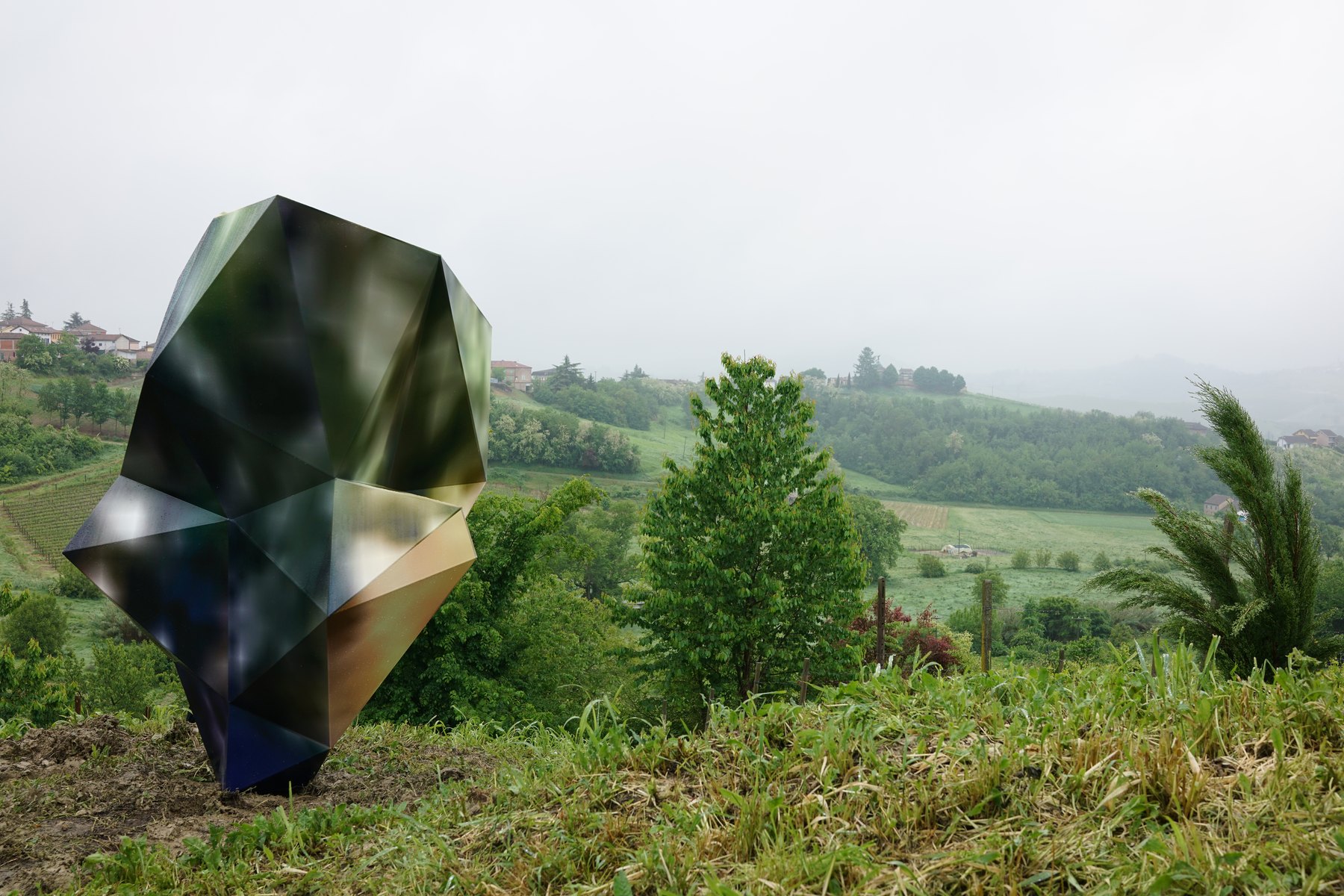
2024, Campus Haspel, Wuppertal, Germany
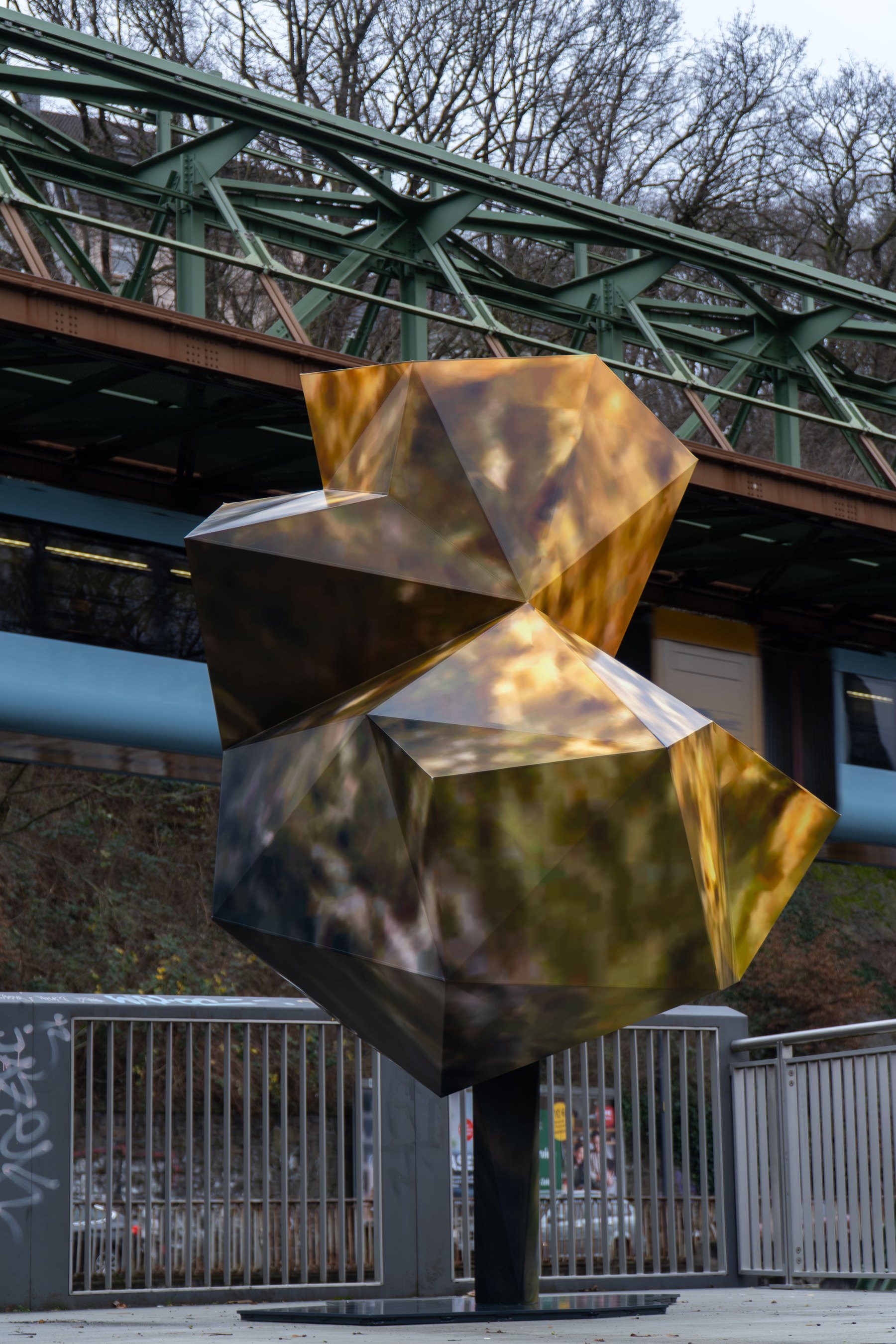
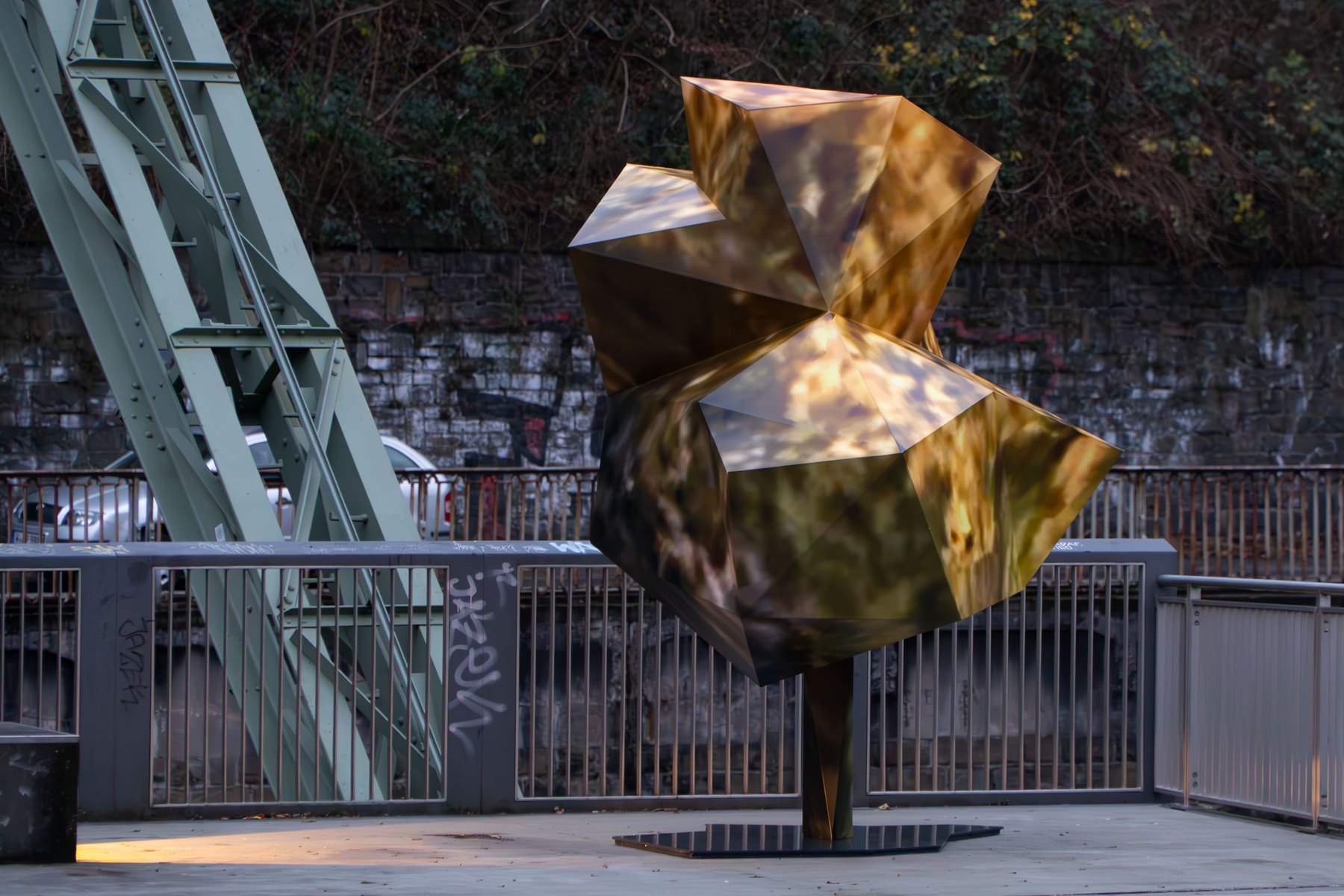
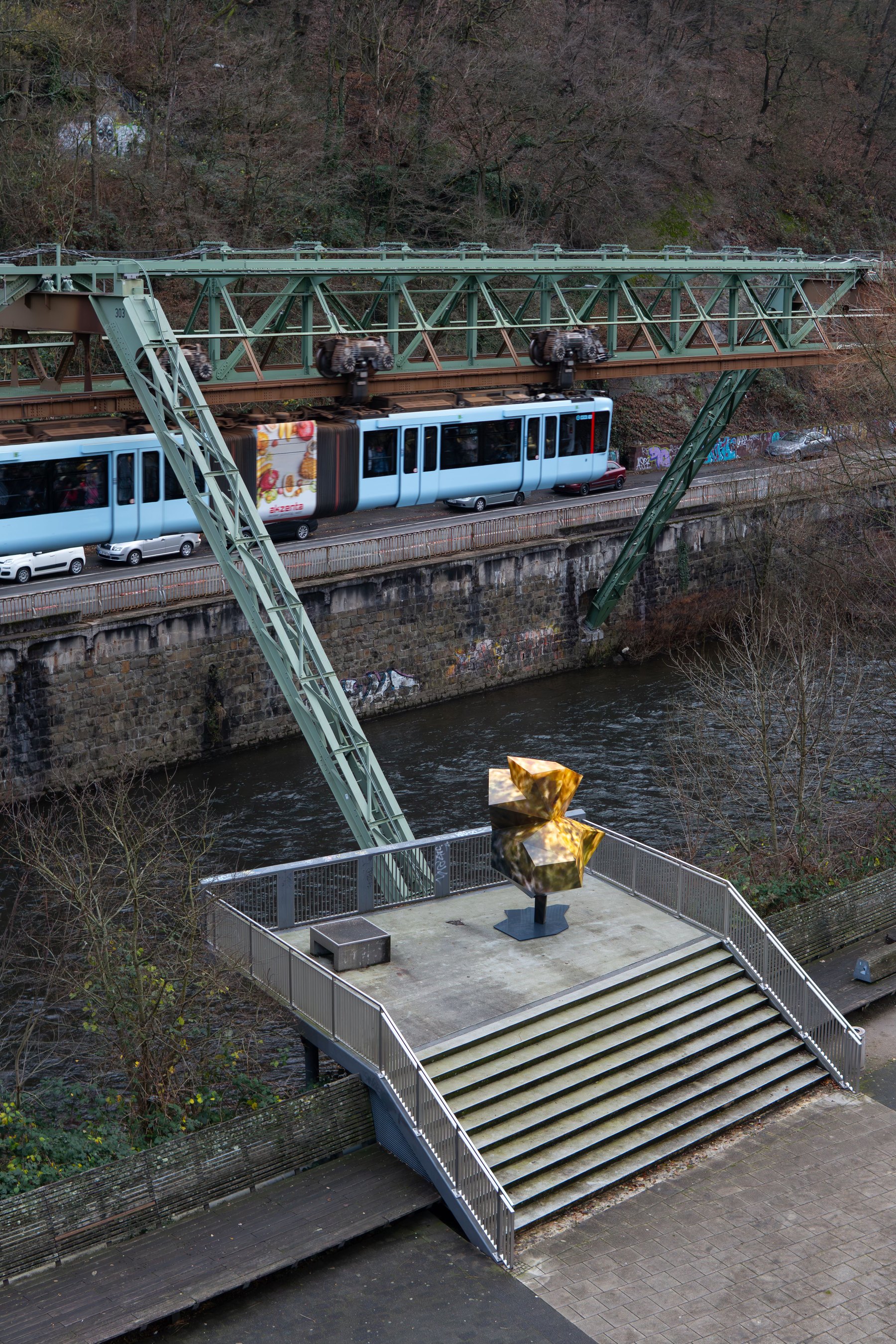
2023, edition of 5 + 2AP
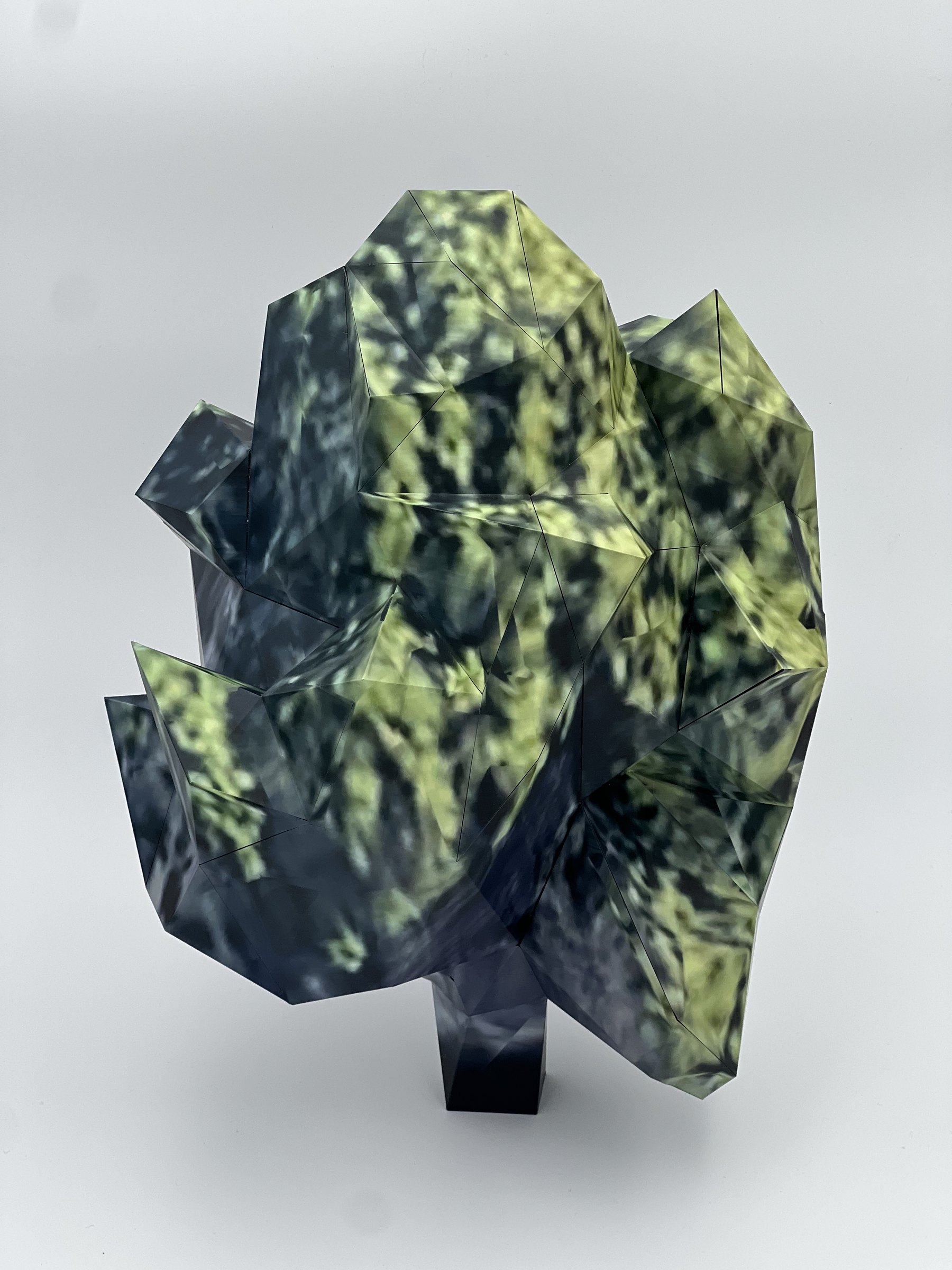
2022, Dusseldorf. The first, built in aluminium. Tore under wind loads and no longer exists.
Photography: Henrik Kam (Gradient Canopy)
2026 Kunstfest, Villa Massimo, Rome
2025 Google Gradient Canopy, Mountain View, CA
2025 Casa Bianca Art Site, Castelnuovo Calcea (Asti), Italy
2024 Google Tree (Wuppertal), Freiluft Art, Wuppertal, Germany
2022 Weinbergspark, Dusseldorf
Collection: Google, Mountain View, CA